
If you’ve been reading my blog, then you’ve probably realised by now that I’m a big lover of self care and everything it stands for. However, it hasn’t always been this way.
When I was younger I used to follow this one particular blogger who focused their whole blog around self love, and how it would change your world. But the problem was, it was all too big for me.
It was buying things, it was taking hours out of your day to enjoy a bubble bath, it was dying your hair, it was getting tattoos… and so on! I mean, if that’s your idea of self care, then you do you! And don’t feel bad for that.
But if that all sounds so far away like it did for me, then hopefully this post might help.
In my personal view, self love isn’t always buying yourself things. It’s not about what other people are doing. It’s not always about blowing off steam. It’s not about hiding from responsibility.
It’s about caring for yourself.
When we love others we don’t just buy things for them, or force them into date activities that google tells us, or tell them to hide from their responsibilities so why do we do this when we attempt to love ourselves?
Instead we’d focus what we’re doing to what they like, want and need in that moment. So surely we should be doing the same to ourselves?
A short history of self care
As I’ve touched on in past posts, self care is any activity that we do to take care of our health. Whether that’s physical, mental or emotional health, and it is not just limited to a certain type of activity or one type of benefit.
In fact, self care was originally a medical concept. It was coined in the 1950’s to describe activities that allowed institutionalised patients to preserve some physical independence – simple tasks that helped nurture a sense of self worth, such as exercising and personal grooming.
Then throughout the years it slowly moved into the mainstream via academics recommending it to people in professions that involve repeated exposure to pain and/or trauma, and then the Black Panther Party recommending it all black citizens in North America as a means of staying resilient while experiencing the repeated injuries of systemic, interpersonal and medical racism.
This original self care isn’t what we see on social media or in advertisements. It was an intentional and radical act of self preservation so that people could continue their fight against racism, or to continue helping people day in and day out.
And yet, somewhere along the way it’s turned into something that has become very commercialised and with it’s own “right” way of doing it.
And what does all of this have to do with boring self care?
Well, we are all different. We all have different needs and health, and we need to listen to ourselves.
There’s something called the Maslow’s hierarchy of needs, which I’ll include an image of below, as I find it such a helpful resource.
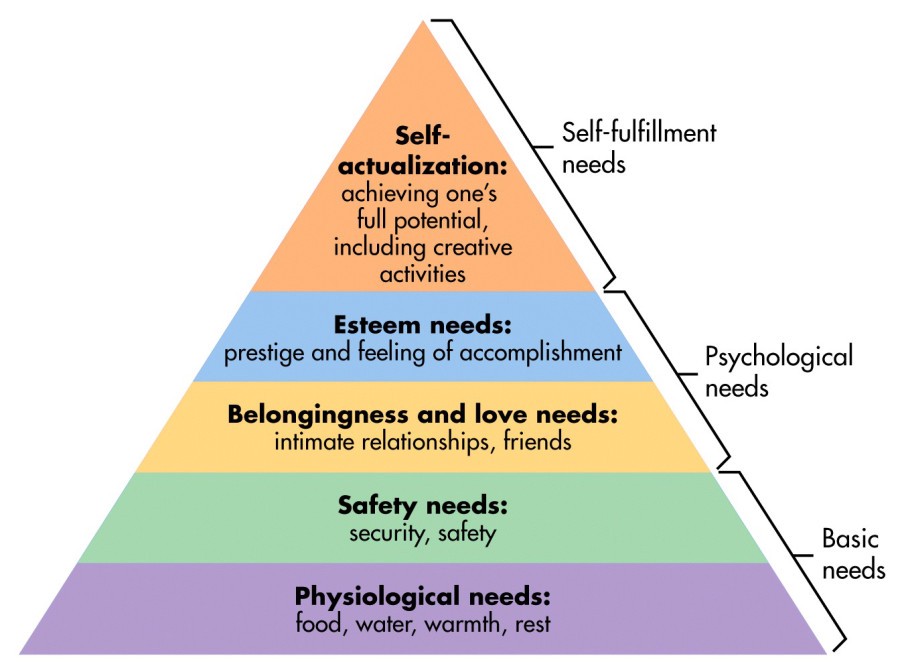
And the idea is that you have to have the lower layer feel stable and fulfilled before you can build the next layer. So you begin with making sure your physiological needs are met first, before working your way up.
And while some of those layers might feel really obvious when you’re reading them, take a moment and really think about them.
When was the last time your just rested? When was the last time you checked on your hydration? Have you eaten okay today?
It can be so easy to take these things for granted and actually sometimes miss them! So take a moment and check in, and if you’re struggling at the moment why not check in with your layers and see where you are and what “boring” self care you might want to prioristise for yourself.
Whether that’s scheduling time for yourself with your favourite book. Whether that’s drinking a glass of water. Whether that’s finishing work on time so you have time to make yourself dinner.
If you’d like some more self care ideas, then why not check out my self care alphabet here?
And please do let me know your thoughts about boring self care in the comments below! I’d love to hear them.

ps. I am not a mental health or medical professional. Please do not use my blog instead of these services, and do reach out to your GP/doctor if you’d like support.
Remember that there are also organisations such as Samaritans (116 123) if you are also UK based and would like someone to listen.
And photo by freestocks on Unsplash.
 That Self Care Girl